Tea & Teaware Guides
Teapot Size Guide: Capacity in mL, Cups and Dimensions
Choose a teapot by the tea you need to pour in one round: your usual cup fill multiplied by the number of servings. One 250 mL mug needs 250 mL of tea; two need 500 mL. Three small 40 mL tasting cups need 120 mL. Check the pot’s usable brewing capacity with leaves inside, because a brimful capacity label does not guarantee that much tea in your cups.
Ask whether the listed capacity is measured to the rim or to a normal brewing level. Leaves occupy space, and filling too high can make a vessel awkward to handle. The number printed on a product page is therefore a starting point, not a promise of the amount you will serve.
Yixing teapot sizes: small, medium and large
Yixing teapots come in sizes below 100 mL as well as several hundred millilitres and larger. Names such as xiaopin (small) and zhongpin (medium) are useful shopping shorthand, but their boundaries vary between sellers. The following bands are a comparison aid, not a universal industry standard. 1 cc = 1 mL; cc means cubic centimetre, as shown in the NIST volume-unit reference.
| Size label | Listed capacity | What to consider |
|---|---|---|
| Extra small | Up to 130 mL | Compact, repeated infusions with small tasting cups; check the opening and pouring control. |
| Small — xiaopin | Over 130 to 200 mL | A useful range to compare for solo or two-person gongfu sessions, depending on cup fill. |
| Medium — zhongpin | Over 200 to 350 mL | More tea per round for sharing; check the weight and grip when full. |
| Large | Over 350 to 600 mL | Compare with the total volume needed by the group, rather than the number of guests alone. |
| Extra large | Over 600 mL | Some are made for display or collecting; brewing suitability depends on the individual pot. |
Capacity by number of drinkers: starting ranges to compare
For small-cup gongfu brewing, you could compare the listed ranges below. They are starting points, not measured serving guarantees. A person drinking from a 250 mL office mug has different needs from a person taking several 40 mL tasting cups.
| Routine | Listed sizes to compare | Check before buying |
|---|---|---|
| One drinker | 130–180 mL | How much you drink per round; a smaller pot may suit short, frequent infusions. |
| Two drinkers | 200–240 mL | Measure both cup fills; smaller cups may need a smaller pot. |
| Three to five drinkers | 260–350 mL | Allow for the actual number and size of the cups used in that session. |
| Six or more drinkers | 320–600 mL | Six 40 mL servings need 240 mL of tea. Larger cups or more guests change the requirement. |
Brimful capacity is not the amount you will serve
A seller may quote brimful capacity or capacity at a chosen brewing level: ask which method was used. Tea leaves, fill level and liquid retained after pouring affect the serving yield. Do not automatically subtract a fixed 20–40 mL. Measure the amount you can comfortably pour using your usual leaf dose, and repeat with water alone for comparison.
Does tea type change the size you need?
For short gongfu infusions of rock oolong, Dancong or Tieguanyin, an 80–130 mL pot is one option to compare when it matches your dose and cup volume. Check leaf access and how quickly the pot drains. Ripe Pu-erh and aged teas do not automatically require a large pot: 250–300 mL may suit sharing, while a smaller pot can suit one drinker. Capacity alone does not establish wall thickness or heat retention.
Video notes: begin with your usual brewing-water volume
In the teapot-selection discussion by 懂茶帝V, the speakers use 80, 130 and 150 mL as examples of drinkers’ usual water volumes and relate pot choice to the leaf-to-water ratio (about 2:08–2:24). They also discuss access for long leaves and easier cleaning (about 4:05–4:17). These are practical prompts to check your own routine, not fixed capacity rules or independent tests of Sandao’s products.
Measure your usual serving first
Fill a cup to the level you enjoy drinking and measure the water in a kitchen measuring jug. Repeat for each person. For example, three servings of 40 ml require 120 ml of tea in the cups. You will need to consider leaf displacement and liquid left behind when selecting a pot.
| Example routine | Tea needed per round | What to verify |
|---|---|---|
| One small 50 ml serving | 50 ml | Whether the pot drains well at your intended brewing level |
| Three 40 ml servings | 120 ml | Usable volume with leaves inside |
| One 250 ml desk drink | 250 ml | Comfortable fill level and room for the infuser |
These are arithmetic examples, not fixed recommendations for pot size. Different leaf shapes and different brewing methods change the space you need.
Translate millilitres without confusion
Chinese teaware listings commonly use millilitres. For US fluid ounces, divide millilitres by approximately 29.57. A 150 ml vessel is about 5.1 US fl oz; 250 ml is about 8.5; 450 ml is about 15.2. US and imperial fluid ounces differ, so keep the millilitre figure when comparing listings from several countries.
Teapot sizes in mL and US fluid ounces
| Listed capacity | Approximate US fl oz |
|---|---|
| 120 mL | 4.1 |
| 140 mL | 4.7 |
| 160 mL | 5.4 |
| 200 mL | 6.8 |
| 250 mL | 8.5 |
| 340 mL | 11.5 |
These conversions describe the listed volume, not a guaranteed serving yield. For a small gongfu session, compare the tea you need in each round with the pot’s usable volume. For a longer drink, consider whether you prefer one larger infusion or several small rounds.
Compare actual teapot dimensions
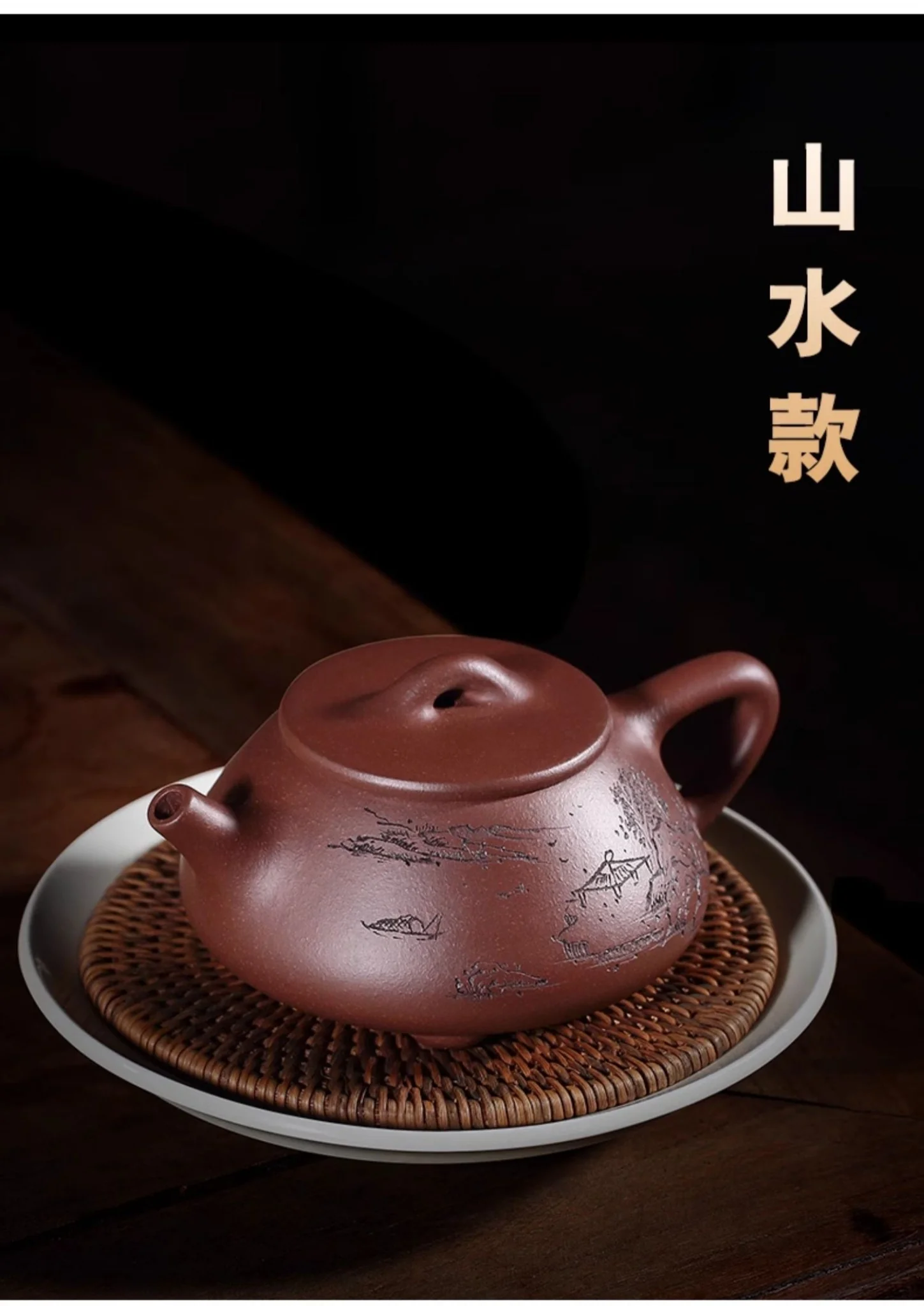
The 140 mL Zi Ni Hanwa teapot is listed at approximately 13.2 cm from spout to handle, 5.6 cm high and 7.6 cm across the opening. The 160 mL Zhu Ni pear-shaped teapot is approximately 11.2 cm long, 8.4 cm high and 4.2 cm across the opening. A slightly larger listed volume does not necessarily mean a longer or wider pot.
For another size comparison, view the 340 mL Da Hong Pao Fanggu teapot. Compare dimensions, grip and pouring space as well as millilitres. These are listing specifications, not independent capacity tests.
Check dimensions as well as volume
Two vessels with the same nominal capacity can feel very different. Look at height, opening width, total width including the handle and the footprint on your tray. A wider opening may make leaf removal simpler, while the handle shape affects the way you hold a full vessel.
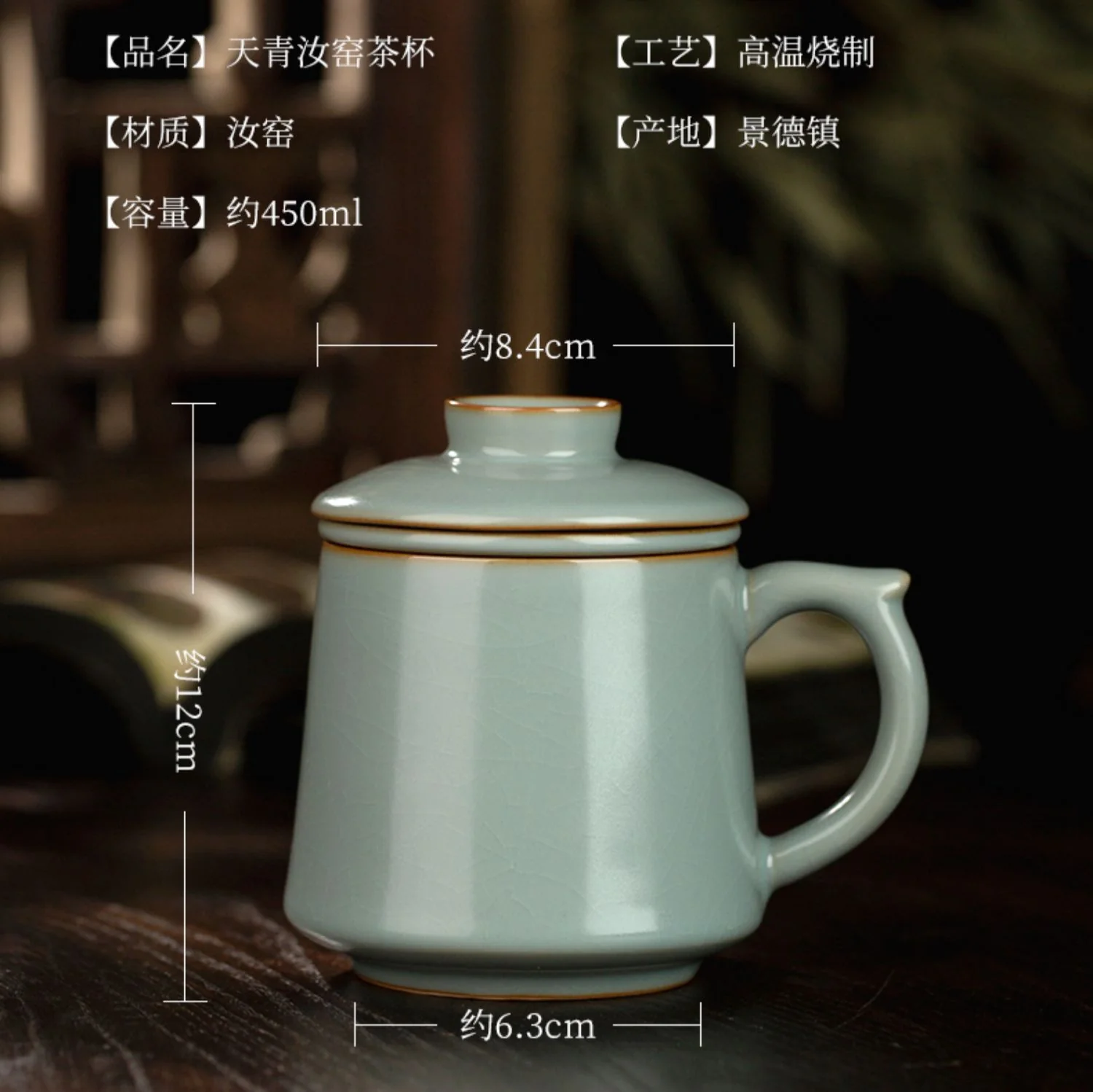
Sandao’s supplied mug photograph lists approximately 450 ml, a height of 12 cm, an opening of 8.4 cm and a base of 6.3 cm. These are supplier specifications; they do not establish the usable volume with the basket inserted. See the ceramic mug details and ask for clarification if that distinction matters to you.
A useful question to send the seller
“What is the capacity at the normal brewing level, and how was it measured?” Add your cup size and number of drinkers. That question produces a more useful answer than asking for the best size without describing your routine.
Related guides
- Yixing Teapot or Glazed Ceramic: Which Should You Choose?
- How to Use a Ceramic Infuser Mug at Your Desk
Sources and further reading
Product photography supplied for Sandao. The illustrated pieces are contemporary examples; historical references do not authenticate them. Sources consulted 3 October 2026.