Tea encyclopedia
Jingdezhen Blue-and-White Teaware: A Guide to Qinghua
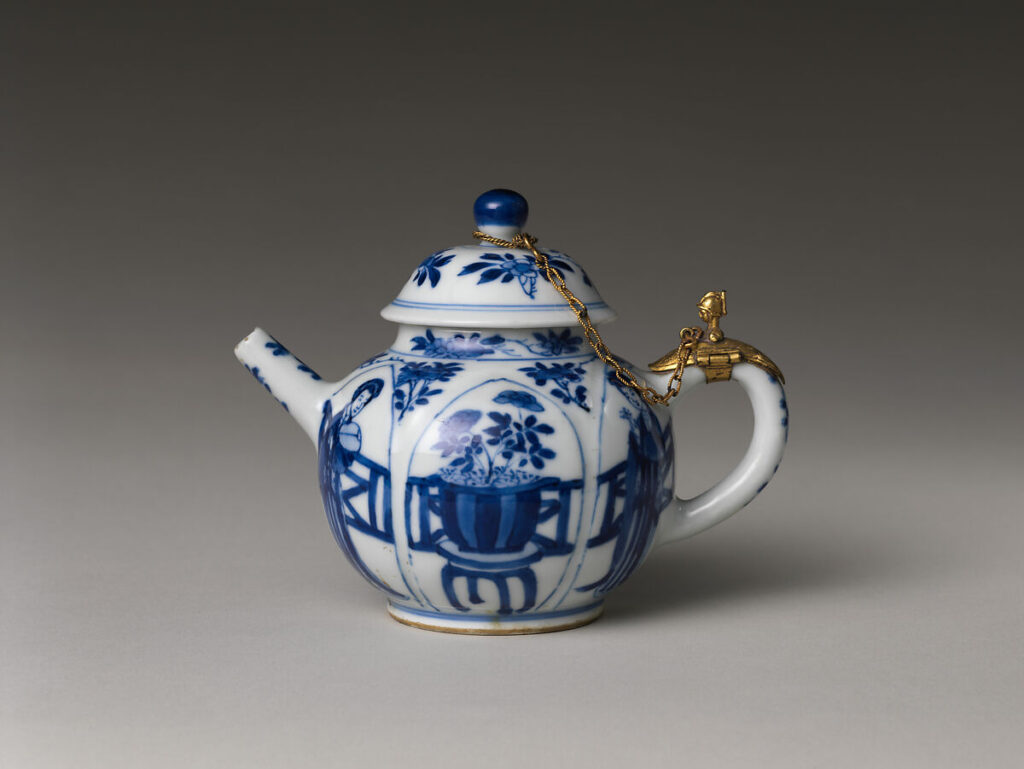
Blue-and-white ceramics are associated with Chinese porcelain, but the phrase describes decoration rather than one vessel shape. It can apply to bowls, cups, teapots and other forms.
What makes it blue-and-white?
The Victoria and Albert Museum describes blue-and-white decoration as cobalt pigment on a white ceramic body, generally painted beneath the glaze. Its account highlights the development of clay recipes and firing technology at Jingdezhen during the Yuan dynasty.
A documented tea vessel
The Metropolitan Museum of Art records a Jingdezhen porcelain teapot from the late seventeenth to early eighteenth century. Its material description identifies cobalt-blue painting beneath a transparent glaze, together with a European mount. This museum object illustrates a historical vessel; it is not a Sandao product listing.
Choosing modern teaware
For a contemporary piece, request photographs of the decoration and functional details: rim, handle, spout or lid. Confirm the capacity, dimensions and suitability for the intended use with the supplier.
Explore Jingdezhen ceramics or ask about available pieces.
References and image
V&A: Chinese blue-and-white ceramics; The Met, object 79.2.189a, b. Image marked Public Domain by The Met.